
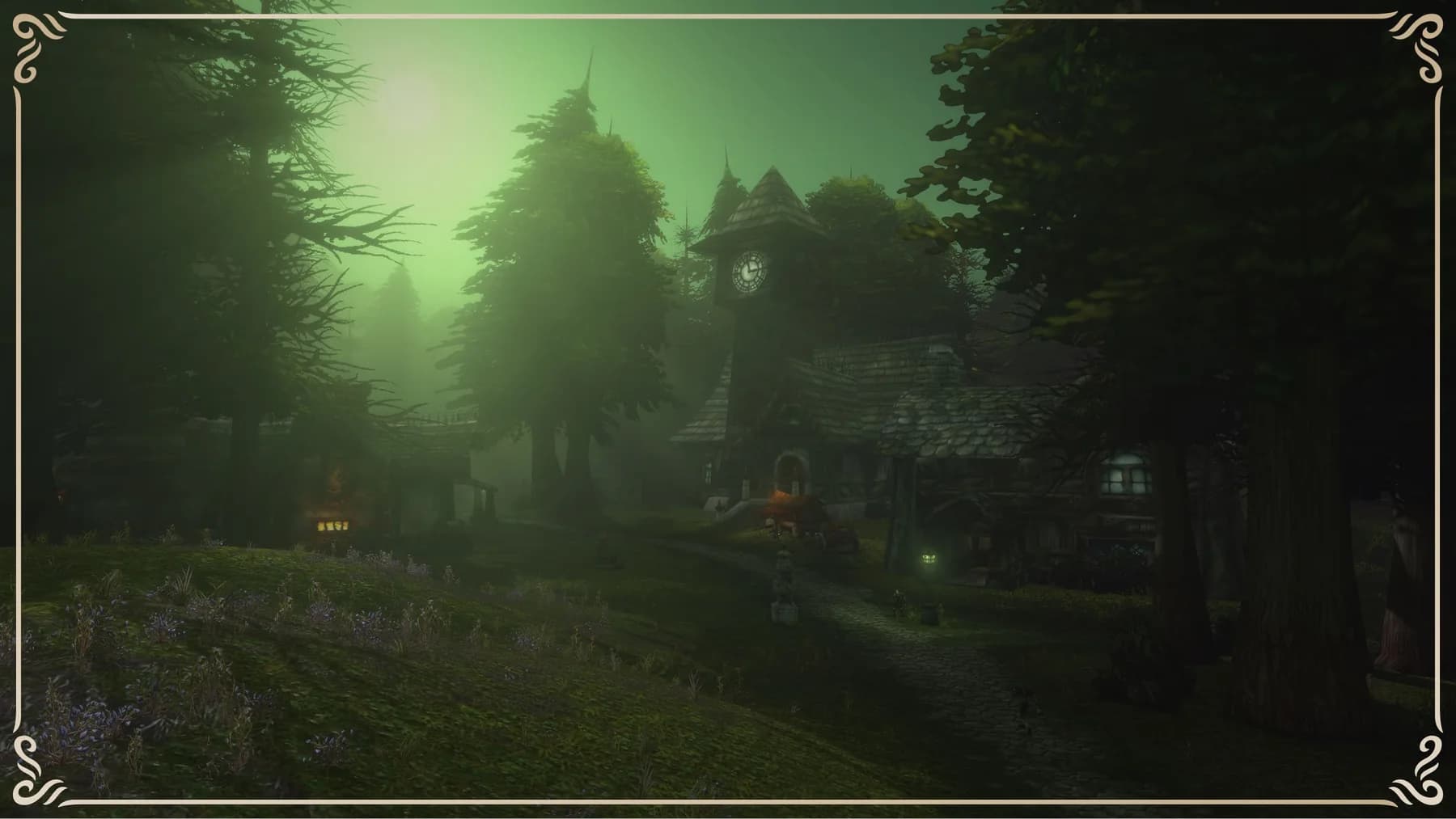
A good bear tank controls the next few seconds: which enemy is dangerous, where the party should stand and how much rage the next response needs. This guide connects talent choices to the pull instead of presenting an unexplained list of buttons. The combat priorities are draft recommendations, not a tested best-in-slot build or an optimal damage simulation.
Source check: October 22, 2026. Gameplay review pending. Read Blizzard's Druid deep dive together with the October 15 tuning notes. Later tuning takes precedence over older previews. The beta's announced final full test day was October 21; arrange a future test only when official access is available.
Talents and combat priorities

Druid / Bear tank
Feral tank playbook
Build enough control to keep the party safe, then spend spare rage on threat. Your next decision depends on loose enemies, available rage and incoming damage, not a fixed button loop.
Beta reference 1.60.1.70425 · 2026-10-16. Draft priorities; gameplay review pending.
Talents, explained
 FerocityFeral Combat · Row 1 · 5 ranks
Reduces the cost of your Maul, Primal Bite, Swipe, Claw, and Rake abilities by 5 Rage or Energy.
Why consider it
Cheaper rage spenders leave more room to react. A bear that repeatedly runs dry should examine costs before adding another expensive attack to the opener.
The trade-off
It reduces resource pressure; it does not create starting rage or guarantee that an attack lands.
 Heart of the WildFeral Combat · Row 1 · 5 ranks
Increases your Intellect by 10%. In addition, while in Bear Form or Dire Bear Form your Stamina is increased by 20% and while in Cat Form your Strength is increased by 10%.
Why consider it
The Bear-form stamina component makes this an early survival consideration, rather than a talent to postpone because an older tree placed it much deeper.
The trade-off
Extra health is a buffer, not healing or threat. Keep the healer's recovery window in the pull plan.
 Feral SwiftnessFeral Combat · Row 2 · 2 ranks
Increases your movement speed while in Cat Form by 30%, and increases your chance to Dodge by 4%.
Why consider it
Separate its movement benefit from its dodge benefit. For bear tanking, read the part that actually applies to the form you will use.
The trade-off
A movement talent is not permission to outrun the healer. Dodge also makes incoming damage less predictable over a short window.
 Feral InstinctFeral Combat · Row 2 · 3 ranks
Increases damage done by your Swipe ability by 30% and reduces the chance enemies have to detect you while Prowling as if you were 3 levels higher.
Why consider it
Consider it when Swipe contributes meaningfully to your small-pack threat. Check the current effect rather than assuming this is the old passive bear-threat talent.
The trade-off
Stronger Swipe does not make it an unlimited-target attack or solve a single enemy running outside its reach.
 Thick HideFeral Combat · Row 2 · 3 ranks
While in Bear Form, Cat Form, Dire Bear Form, or Moonkin Form, you gain 3 additional base Armor per level and another 2.00 base Armor for each point of defense skill beyond five times your level. This amount can be further increased by multipliers from those forms.
Why consider it
Inspect the relationship between your Defense bonuses and armor. It is a reason to evaluate the actual defensive item, not discard it because a Classic damage list ignores Defense.
The trade-off
Compare the complete equipment change. An armor interaction alone is not a universal item score or a critical-hit immunity claim.
 Primal BiteFeral Combat · Row 4 · 1 rank
Bite the target, dealing 100% normal damage plus 26 and generating a high amount of threat.
Why consider it
This is the bear-specific active threat choice to plan around once you have invested in its prerequisites. Keep enough rage for it when it answers the current threat problem.
The trade-off
It competes for rage with other actions. A low-level bear or a build without the talent must use a different sequence.
 Blood FrenzyFeral Combat · Row 4 · 2 ranks
Gives you a 100% chance to gain an additional 5 Rage any time you get a critical strike while in Bear Form or Dire Bear Form. In addition, your non-periodic critical strikes from Cat Form abilities that generate Combo Points have a 100% chance to add an additional Combo Point.
Why consider it
Its critical-strike resource interaction belongs in the explanation of why the bear sometimes feels much smoother after a crit, not in a promise of constant rage.
The trade-off
A chance-based return is not available on demand. Do not budget an emergency action around a proc that has not happened.
 Natural ReactionFeral Combat · Row 6 · 5 ranks
Increases your dodge chance by 5%, and gives you a 100% chance to gain 5 Rage each time you dodge.
Why consider it
Dodge and its associated rage return connect survival and resource flow. Track both when comparing a deeper bear build.
The trade-off
A defensive proc is variable. Test against comparable enemies and do not count the same avoided hit as both incoming damage and received rage.
Combat priorities
Establish the pull, keep the dangerous target facing away from the party and reassess after each action. Maintenance effects are conditional, not commands to recast them every time.
First available ranks are filtered by level; this does not verify your training or a legal talent allocation. Use your actual spellbook. These are conditional decisions, not a fixed cast loop.
 Faerie FireRank 1 · available from level 18
When: On the agreed pull or when the armor effect needs refreshing
Use its ranged contact deliberately. Do not accidentally bring an extra pack while the party is still preparing.
Spell reference
Decrease the armor of the target by 175 for 40 sec. While affected, the target cannot stealth or turn invisible.
55 Mana · 30 yd range · Instant MaulRank 2 · available from level 18
When: You have rage left after the actions the pull requires
This modifies the next melee attack. Treat it as a resource commitment, not a free instant button, and stop queuing it if it starves your next response.
Spell reference
Increases the druid's next attack by 27 damage.
15 Rage · Next melee · Requires Bear Form, Dire Bear Form
When the plan goes wrong
Rage keeps reaching zero
Stop automatic Maul spending, note misses and the point at which rage disappears, then compare the cost of the actions you actually used. Do not deliberately take avoidable damage to make a resource graph look better.
One enemy is always loose
Check whether it was outside Swipe's coverage, attacked a different target or entered late. Record that enemy and your response instead of changing the entire build immediately.
A guide tells a level-18 bear to use Lacerate
That is the wrong progression stage. The archived spellbook first lists Lacerate at 42. Use the level filter and your real spellbook, not a level-60 sequence pasted into an early dungeon.
Before the first pull
0/4How to read the bear rotation
An opener establishes a target; a priority decides what to do when the pull changes. They are not the same thing. On a simple pull, let the group gather, establish contact and keep the enemy positioned so the party can follow its kill order. Once threat is stable, maintain the effects that are still useful and spend spare rage without removing your ability to react.
Maul is a next-melee commitment. Repeatedly queuing it while rage is scarce can make the rest of the kit feel unavailable. If a loose enemy needs attention, recover that enemy before adding more threat to the one already attacking you. When you have Primal Bite, give that actual threat decision room in the resource budget. Lacerate belongs to a later progression stage and a target that will survive its setup; it should not appear in a level-18 opener.
For several enemies, count the targets you actually control. Swipe's recorded coverage is three nearby enemies, not every creature visible on screen. A fourth or late-arriving enemy still needs a target decision. Avoid rotating attacks through a marked control target simply to make the damage meter look balanced.
Build for the problem you are solving
For an early bear, compare cost reduction, health and the defensive tools available now. Later, evaluate active threat talents and resource interactions against the pulls you actually host. A deep-tree talent cannot solve a level-15 problem today, and a chance-based rage return should not be spent in your plan before it occurs.
When comparing equipment, separate maximum health, physical mitigation, avoidance and threat. They answer different questions. There is no universal percentage improvement that turns a little more damage into the same amount of survival. Record a concrete before/after equipment change and what kind of incoming damage the comparison represents.
Describe the tank you are bringing
Tell the organizer your region, faction, character ruleset, level and intended role. Say whether this is your first time tanking the dungeon. Feral damage and bear tanking share a class, but that does not make every talent choice, piece of equipment or player expectation interchangeable.
Ask what the group is trying to do: finish the dungeon, complete a quest bundle or learn a route. A timed repeat run and a first visit need different expectations. Agree on a finish time and who makes the call to stop. An honest beginner-friendly listing is more useful than an impressive label that hides the actual plan.
Build from the right version
Open the Forever Druid calculator. Set your actual level before allocating points, read the evidence labels and save a named local build. Copy its share link into your private group planning conversation. A recorded tooltip is evidence about that source, not proof of an optimal allocation.
Blizzard describes Blood Frenzy as combining earlier crit-related talents and Natural Reaction as a bear dodge/rage talent. Check their current ranks rather than pasting a TBC or Wrath tree. The October notes also corrected Bear-form Faerie Fire threat and several talent-application bugs. These changes are why the client build belongs in a useful test report.
Do not use the simulator's provisional tank output as a survival guarantee. If comparing a different talent choice, keep the gear, encounter assumptions, buffs and version constant, and state what the model does not establish. Unknown mitigation behavior needs an observation, not an invented equivalence.
Make the first pull readable
Before moving, agree on one kill marker, who calls extra enemies and how the healer signals a pause. Ask each player which relevant control or interruption they actually have at their level. Do not assume a class name guarantees every tool described in a level-60 guide.
Start with a pull the group can describe and recover from. If threat feels poor, record the actual sequence and whether attacks landed before changing several things at once. If damage feels dangerous, distinguish an extra pack, missing preparation and an encounter mechanic from a general conclusion that the class cannot tank.
Rage shortage and incoming damage are different problems. Note whether the problem happens before the first attack, while changing targets or after repeated special abilities. Avoid turning a resource observation into a recommendation to take unnecessary damage. Bring the issue to the class discussion with your level and build link.
Check equipment and loot expectations
Inspect your actual items in the Forever database. Read source and build labels; an external reference is not an exact-client observation. This kit does not assign universal stat weights or recommend a cloth item merely because a generic score is high.
Agree on tank, damage and off-spec loot before entry. If the host reserves anything, ask for the item names, not just a count. A first-session gear discussion should end with a clear plan, not a promise that a particular item will drop.
Leave one finding worth reusing
After the session, record the date, client build, level, dungeon, build link and one specific observation. Explain what happened, what you expected and what remains untested. Keep player names and screenshots private unless everyone involved approved publication.
Use the guide-review assignment to propose a correction. A reviewer should check one statement against its source or reproduce one sequence; reading the page alone does not establish a complete gameplay review. When a real host and time are confirmed, use looking for group. Joining the organizers' guild is not required.
Written by Open source contributors. About our organizers · Suggest an article correction in Discord